Wednesday, June 24, 2015

Batuqui um restaurante brasileiro (Batuqui A Brazilian Restaurant)


BRINGING A PART OF BRASIL TO CLEVELAND
I recently visited Batuqui, a Brazilian restaurant opened in the Larchmere/Shaker/Buckeye area with some friends to test drive the restaurant and the menu, at a soft opening. A soft opening is like a dress rehearsal for restaurants. Batuqui owners, Carla Batista and Gustavo Duarte invited a small group of people to practice on before the official opening.
Firstly thank you so much for opening your restaurant in the neighborhood. Batuqui fills a culinary void and I predict much success for the restaurant.

I enjoyed the experience very much and many of the dishes are exceptional.
Batuqui has a patio in front for diners. Being in a converted house it of course has an intimate feel inside and out.
Our entourage had a great time enjoying appetizers, salads, drinks, and entrees.

The first thing we tasted was Bolinho de Bacalhau, a Cod fish croquette appetizer. It was cooked to perfection. Out of all the ways to present this Batuqui serves several slightly larger than bite sized croquettes, breaded, and deep fried. The proportion of bread to Cod is perfect and pretty traditional, however the bread coating is coarser than I’ve had in past food forays. This provided for a fantastic contrast of the exterior crunch to the pâté like Cod interior. It was served with lime garnish which to my surprise complimented the Cod well.

Pao De Queijo, another traditional dish of chewy cheese puffs was wow wonderful! I made sure these stayed at the other end of the table so as not to eat them all. Pão de queijo are a lot like French gougères. With both, the end result is a hollow pastry puff. Unlike the French gougères pão de queijo are made with tapioca flour or cassava flour and didn’t seem as crisp as the French counterpart, but were kind of melt in you mouth chewy.

The next fantastic offering that caught my palate was Calamari Samba. Only the second time I can remember having good calamari in Cleveland (J Alexander's in Beechwood??). I enjoyed the red, light, tomato based, sauce though it ever so slightly overpowered the calamari ringlets. This appetizer comes with crostini, a thin, crunchy, seasoned toast.

Xim Xim (de Galinha) was yet another smashing dish, ok this dish is just plain addicting! It was so sublime I think I had a dream about it for a couple of days afterward. Ximxim in many African tongues simply means “stew,” and galinha means chicken in portuguese. Traditionally made with palm oil, dark meat chicken, coconut, shrimp, garlic, ginger and a few other sundries this dish greets your nose as it arrives at the table. If you have allergies, make sure you ask as this dish is often made with peanuts or cashews. Although this was chock full of solid foodstuff it was more of a flavorful soup as opposed to a thick stewy liquid. To many though the process and intent determine whether it is a stew or soup. On the eco tip I’d love to see this made with olive oil rather than palm oil, though it would alter the taste and tradition, still the verdict is A-M-A-Z-I-N-G.


Churrasco Misto, the next entre, is a style of cooking I love. The flavor was very good. The chicken and sirloin tasted like a great dry rub. Is this ever made with chicken dark meat?? It was a great with the farofa, tomato relish, and rice. Farofa is a toasted cassava flour mixture, sometimes cassava flour is substituted with maize flour (farinha de milho). So when you see that sawdust looking stuff on your plate that often accompanies meat… yes, go for it! Eat it directly, sprinkle it on your food, mix it in, revel.

Batuqui, should explore their plating and presentation a bit. I did note that on a few dishes the presentation did not bespeak how marvelous the dish was, dishes should look as exciting as is practical, ergo the garnish. Long gone are the days when an establishment would just plop a sprig of parsley on the dish and call it a day. All things being equal in the restaurant business the experience is as important as the fare and can make a big difference.


Desserts were nice, light, and satisfying.
Pudim de Leite is rich and creamy, it’s a flan made with condensed milk something sweet like sugar or honey and eggs. This was ok but didn't do much for me. It got the least attention at our table and I think was the last to disappear. I don't remember any comments about it. I'm used to the more delicately textured, thicker flan flan and this was thin and the texture very different more toward chewy than melt in your mouth. I'll try it again next time I go.

In contrast the Coconut Butter Cake was such a delight and what a surprise and extra added treat that it came to the table warm!

Another dish was Mousse de Maracuja or passion fruit mousse. One person at our table wanted some addition to the taste, to break up the flavor and although that would work I enjoyed savoring the layers of taste and how some flavor hit my palate at the back and other flavors settle near the middle, just a lot of great movement lingering at the back of my mouth.

Our server was fun and engaging, attentive and made us feel very comfortable. So was hostess Alexis/Alexandra yes she was fun.
I loved the atmosphere and the decor was fun. It was exciting seeing a guitar in the corner and the young man on the cajon or box drum was a great addition. Batuqui plans to have music on Sundays.

Batuqui should not overlook promoting that they have vegetarian dishes and should seek to provide vegetarian versions of some of the dishes they have on the menu. I spoke to someone about trying Batuqui out, they responded, "don't they have meat? Doesn't sound vegetarian to me." They have two veggie dishes and a few nice salads, but I think they can turn at least one other dish veggie with not a lot of trouble, for instance, they can do a veggie Xim Xim without the chicken, with seafood for pescatarians, without for vegetarians.

I don't know if this would challenge being totally Brazilian but they have a lot of great tastes and flavors with which to work. They could possibly marry the sauce and calamari at the last minute, which they probably do anyway, and that sauce is a possible soup base. Samba soup and salad with a side of Pao de Queijo or with crostini. I'll stop showing how much I don't know about the cuisine.
My point is to make sure they stay competitive and capitalize on their inventory and the huge vegetarian market out there today.

Sunday, January 11, 2015

Jay D'Amico interview from The Jazz Mind in memory of Bobby Jackson


This is a  fun and interesting interview of Jay D'Amico

  "Selections from: Nocturne (CAP Records/2010)
Jazz music is a twentieth century invention that stands on the history of everything that came before it.   Included in that history is the influence of European classical music..."  ENJOY.
In Memory of Bobby Jackson
"Bobby Jackson, a longtime, award-winning jazz broadcaster and educator, died Dec. 9 in Cleveland. Jackson, who was 57, died suddenly of undetermined causes.."

Sunday, January 12, 2014

Writin is Fightin Fighting the Good Fight Rest In Peace Amiri Baraka


I like that Alexs Pate states in the video below “Amiri was before beat,” because though Mr. Baraka was part of the movement, even publishing, Kerouac and Ginsberg before he started Yugen magazine, he is often not thought of as part of this very significant beat shift in literary thinking, especially poetry.

Amiri Baraka strikes a chord in me for many reason, one reason because of his bravery.   Still I search for that consistent core or reserve and resolve to be who I am and do the right thing.  He is asked in this video what is the cost of truth telling. I feel that I have made great and significant gains but sometimes not. 
 I’m not quite sure what institution Amiri Baraka didn’t buck while being himself and following what he learned and what he believe in.  For instance he distanced himself from Black Nationalism to become a Marxist.
           He imparted some insight to this shift stating, "As long as the black writer was obsessed with being an accepted, middle class, Baraka wrote, he would never be able to speak his mind, and that would always lead to failure. Baraka felt that America only made room for white obfuscators, not black ones."           
            His life at the very least exemplifies, an Ismael Reed, quote, “writin is fightin,” from Reed's essay titled, Writin is Fightin: Thirty Seven Years of Boxing on Paper. I love that Baraka was more than sympathetic toward Castro and Cuba, which he made plain with, Cuba Libre, an essay and as a member of the Fair Play for Cuba committee in 1960 and through, ‘A Declaration of Conscience,’ a literary endeavor in favor of Castro’s regime that he co authored.

     
       Alexs Pate’s intro is rather long but, actually 
one of the few intros you don’t want to fast 
forward through. Amir Baraka starts at 9:34
Perhaps the following bespeaks my simple-mindedness, but of all his endeavors, of all there would be to discuss I would have loved to talk to him about his name change.  I legally changed my name in the early 90s and to this time, January 2014 still many are insulted and hurt feelings continue with many refusing to speak it or even write it in legal documents. I approached it thinking of its permanence more or less like a tattoo.  Interestingly, out of all the stakeholders (many more than I thought there could be) the only one who heard the why and embraced me, Cavana Ibeji Opo Faithwalker, was my father after whom I was named.
            Many laugh at us Africans-American half-breeds and we at ourselves as the misspellingess, most prolific name changers on the planet from Shanaynay to Tequila to Mercedes to Trevon, Malik, and Jamal.  I am not positing that we should all change our names or even that we corner the market on name changing and creating anew. I do affirm it is one of our weapons of mass construction to reclaim our very souls and bodies as we have light to do so.  However, we must stop and look at the continuum from Shanaynay to Amiri and realize that  “X” marks the spot.  “X” may be the alpha and omega of our kujichagulia, our self-determinism.  Poor Shaniqua political at birth, political by birth, political when she just wants a proper future for her son.  Take heart in Amiri.  
Thank you Amiri Baraka (born Everett LeRoi Jones; October 7, 1934 – January 9, 2014), formerly known as LeRoi Jones and Imamu Amear Baraka

Monday, December 23, 2013

Jazz is My Religion Surrealism is My Point of View


Ted Joans reads poetry with jazz, 1964 Amsterdam, read starts at 2:47 in.
Theodore "Ted" Joans (July 4, 1928 – April 25, 2003) was an American jazz poet, surrealist, trumpeter, and painter. His work stands at the intersection of several avant-garde streams and some have seen in it a precursor to the orality of the spoken-word movement. However he criticized the competitive aspect of "slam" poetry. Joans is known for his motto: "Jazz is my religion, and Surrealism is my point of view".- Wikipedia Ted Joans

Sunday, December 22, 2013

Jazz, Two Poems and a Funeral


King Pleasure's vocalese classic
Parker's Mood

Jazz, Two Poems and a Funeral

The impetus for the last blog, 'The impetus for the last blog, 'Jazzhead Great Bobby Jackson Dies at Age 57.' Here are bits and pieces sparked by his memorial had jazz or course and poetry.
One thing that thrills me about ‘spoken word’ is how the structure of the word on the page, its grouping with other words, whether consistent end rhyme is employed, stanzas and couplets, that make meter and even individual iambs in say tetrameter or pentameter all are questioned.   The word is primary but flows with, pushes against, responds to and calls or answer or completes an idea the music. Enter jazz vocalese the art of taking lyrics and singing them to pre-existing tunes, the structure of the rhythm of the words against and with the structure of jazz tune. The music and it's form is primary. In either case words can be on the upbeat, downbeat, off tempo, they expand and contract in the most interesting and exciting ways.
At Bobby Jackson’s memorial service on Monday the 16th (2013) councilman Jay Westbrook read a piece he found in a small book of poetry at Bobby’s house.  The poem/lyrics were by King Pleasure aka Clarence Beeks a jazz singer in the 40s and 50s.  The piece is called, Parker’s Mood by Charlie ‘Yardbird’ Parker.  King Pleasure does a vocalese version of it and thus the lyrics exist, a year before Parker died in March 1955. It was already an emotional time at Bobby’s memorial. At the reading of Parker’s Mood myself, many in my row, the row in front, the row behind cried Bobby a river.  Jay didn’t read with any particular expertise as much as reading from a place of deep loss at Booby’s passing.  It is easy to confuse the piece with ‘Goin’ to Chicago’ many of the lyrics are the same and there is a hint of humor throughout.  Jay’s reading of the piece was so different from the performance of the piece yet the spirit seemed to remain.

 King Pleasure - Parker's Mood- Come with me If you wanna go to Kansas City
I'm feeling low down and blue, my heart's full of sorrow Don't hardly know what to do;
where will I be tomorrow? Goin' to Kansas City. Want to go, too? No, you can't make it with me. Goin' to Kansas City, sorry that I can't take you. When you see me comin', raise your window high, When you see me leaving, baby, hang your head and cry,

I'm afraid there's nothing in Miss Creamy's dreamy town A honky-tonky monkey woman can do.
She'd only bring herself down.
So long, everybody,
the time has come and I must leave you. So, if don't never see your smiling face again
Make a promise you'll remember, like a Christmas day in december, That I told you all through thick and thin,
on up until the end, Parker's been your friend.
Don't hang your head when you see those six pretty horses pullin' me.
Put a twenty dollar silver piece on my watch chain, Look at the smile on my face, And sing a little song  to let the world know I'm really free. Don't cry for  me, 'cause I'm going to Kansas City.Come with  me, if you want to go to Kansas City


Don't Let the Sun Go Down..


Well not exactly. Another set of words that was not read was, The Sun Must Go Down. it was in the program and I was struck by how the sanctity of creations aren't that holy if they don't fit the occasion. There were a few lines cut from the lyrics before going into the program. Mandrill came into being in 1968, started by three brothers from brooklyn all horn players; trombone, trumpet and sax. They are considered funk not jazz. (Click on the pretty Mandrill to hear, "The Sun Must Go Down," lyrics are below)


It is an interesting conversation between poetry (I’m using an expansive definition of poem) on the page, poetry when one speaks it and words when music is included.   Often the relationship is poetry with music added and many times music w poetry added.  


2014 marks year 17 for the Nia Coffeehouse.  In the early years I endeavored to bring music, mostly standard jazz  and poetry audiences together.  The jazz folks inevitably wanted more jazz less poetry and the poetry audience wanted more poetry and less jazz.


On venues like youtube how often music and even the interpretation added to the word on the page are distasteful. Many times it seems the poster does not fully understand or accept the power of the word on the page and seeks to help it out a bit. So often the music is inappropriate to the word or the volume is plain overpowering.  Many times the voice is not so much interpreting as pushing a preconceived idea of what the poem should do or helping the poem with trills here and whispers there.  

The Sun Must Go Down lyrics:
The Sun Must Go Down
One moment feels good, the next not the same
The only thing changeless is change.
The pendulum swings the tides creeping in In the darkness we question
The sun must goo down! Sun must go down and so are we bound
To give way to inevitable changes.
One more time around but look what we ve found
A fresh dawn, a new growth for the ages.
As we flow on our trip once again have a grip,
on the hassels that we probably lack
the sun shine on we turn our backs. T
HE SUN MUST GO DOWN

-Omar Mesa 21 Mandrill

Sunday, December 15, 2013


Bobby Jackson

  Jazzhead Great Bobby Jackson Dies at Age 57

The world and jazz community has suffered a great and sudden loss.  Although Bobby grew up in the Bronx we claim him as our own.  Bobby died suddenly at his home in Cleveland, Ohio Monday December 9th common era 2013.

Jackson leaves his wife Lisa Jean and his 10-year-old son, Xavier. The family is welcoming support through donations to the Bobby Jackson Memorial Fund. Send donations to Key Bank, 3266 Steelyard Drive, Cleveland, OH 44109.
Here is the obit from Jazz Times.

Memorial Service and Celebration

A funeral service for Bobby will be held this coming Monday, December 16 at 11AM at the University Circle United Methodist Church,  1919 E.107th Street.
Also Monday  evening the 16th  at 7PM at Nighttown, Sean Jones, the artistic director of the Cleveland Jazz Orchestra, on whose board Jackson served, will lead area jazz musicians in a celebration of Jackson’s life. There is no admission, donation to the Bobby Jackson Memorial Fund are be welcomed.
The family is also inviting anyone who has a story about or memory of Jackson to share it at his website, The Jazz Mind. www.thejazzmind.com/


Bobby Jackson muy sauve

I will also remember Bobby.  He was wonderfully funny and had a penchant for pulling his expressive face into the act. I marveled and still do at his intimate relationship with jazz greats like Percy Heath, Christian McBride, Janis Seigel of Manhattan Transfer and on and on.  These folks were more than just a day at work to Bobby.  There was nobody he couldn't call up 'out of the clear blue.'
He could make lemonade out of lemons faster than most.  He was warm, engaging, honest, straight forward and authentic and boy did he love his family.. yeah and he was the ultimate jazzhead..


Quote from Monday:" Bobby Jackson is kickin' it with Miles and Mandela this morning. " Makes me smile.

Friday, November 30, 2012

Whole Lotta Readin Going On.. and Poetry Dec. 1st


Near the 216 CLEVELAND area?
Don't forget to stop by the Barnes & Noble bookstore in Woodmere's Eton Square on Chagrin Blvd., and join me for a fun time of browsing, shopping, kibitzing and hearing poetry . . A great group of poets reading between 1:00pm and 5:00pm (see flyer).  Buy something with vouchers (PRINT pi
c two below) and Heights Writes gets a percentage of your purchase. Heights Writes supports the Poet Laureate of Cleveland Heights which is a two year post and other artistic educational endeavors. My term ends in June. It is also Educators' Day at Barnes & Nobles and educators get discounts. NEED MORE INFO? CALL B&N ((216) 765-7520) There are very nice restaurants and shops in Eton Square and in the area from moderate to expensive, I here tell some folks will be smoking cigars across the street at Cousins afterward... could be just a rumor ;-)
 
Vouchers!
 

Sunday, July 29, 2012


Many Cleveland poets and musician will probably be participating in 100,000 poets for change.  The Nia Coffeehouse will be participating.  Here is some info on 100,000 PaMfC. Leave a comment especially if you'd like to participate.  What should the creative community be doing? What good does it do?


Sunday, May 27, 2012

Nia Coffeehouse dates and Protest songs from our readers


Home base for the Nia Coffeehouse is at 2555 Euclid Heights Boulevard in St. Alban in Cleveland Heights 44118.   For more information Ph. 216/759-0790, leave a message here in comments or at Leftthumbprint@gmail.com.  

Follow us on facebook: http://www.facebook.com/pages/The-Nia-Coffeehouse/129467261263 and on Google +.


In this bloggissue:

  1. Announcement and information about our next Nia Coffeehouse events
  2. More on protest jazz and music
  3. Comments and favorites from our readers
  4. Wade in the Water
Our next happenings...
  1. Our next Nia Coffeehouse @ St. Alban music and poetry set is June 26th @ 6:00pm. Nia is coming at you with healthy music, phenomenal words, and some healthy eats for you. And unless we say otherwise, Always Open Mic.  

 Our featured poet is Judith Mansour.   

Judith after her last event... got kinda rowdy

Judith Mansour
Judith has a BA in English and, Psychology and an MA in English and Creative Writing.  She has been a creative force in the writing, art and literature scene behind the scenes and in front of the mic for years. You can find Judith at LinkedIn  and at  facebook.


Vince Robinson (seated) with past and current Jazz Poet members
 The band- Vince Robinson and the Jazz Poets.  Look for future Nia blogs dedicated just to this powerhouse who has done so much in poetry, jazz and the community but for now go here are no less than ten pages on Vince and the cats take your pick.


So Many Issues Too Little Time

Soon Nia will be looking at beautiful music and laying protest jazz aside unless you our readers want to keep protest alive.
We've got some interesting responses for favorite protest music from you but first we have questions. It is quite possible that most folks feel overwhelmed and powerless to do anything about today's social ills.  For one thing, the "what can little ole me do" syndrome kicks into effect for many and secondly there are so many things that need attention it is overwhelming, for instance there is fracking, homelessness, infant mortality, child abuse, oil spill issues, Kony, Travon Martin; the object or the objects of the occupy everything movement; the Grammy awards categories being cut that Nia thinks is an important cultural, diversity and monetary issue for people of color and the list goes on.  


Musicians: Powerful or Powerless


Should musicians and people in media feel powerless? Many talk about the power of music but maybe it's a fairy tale conjured up by musicians and their managers.  Already the entire burden shouldn't be put on jazz so we can broaden the conversation for now with an emphasis on jazz.

Mark David Ritscher aka Malichi Ritscher, a fixture and musician in the Chicago music scene, apparently didn't think the power of music was enough.    Ritscher's self-immolation in 2006 on downtown Chicago's Kennedy expressway not mentioned by the media for nearly a week . Chicago Sun-Times columnist Richard Roeper, finally wrote  "With all due respect, if he thought setting himself on fire and ending his life in Chicago would change anyone's mind about the war in Iraq, his last gesture on this planet was his saddest and his most futile."[3]
Ritscher left a detailed smoking gun (sorry) pointing at protest as the raison d'être of his actions.  What about protest music, the power of music, the music that soothes the savage beast?  The actual quote is "music has charms to soothe the savage breast" and forgive me for waxing pedantic. It would be remiss of us not to mention that according to Ritscher's son Mark David was a recovering alcoholic fighting depression and yet we say this exposes two more arena's in which one must question the power of music.


Latin Jazz, Grammy Awards Protest
Go to Multi- American for the entire video and more info on the protest


In contrast to Mr. Ritscher's self-immolation members of the Latin Jazz community protested with music and signs and slogan-chanting the elimination of 31 mostly people of color categories from the Grammy Awards. Polka, gospel, Native American and R&B are among the categories that have been removed.  It would be very interesting if musicians took a page from Black folk and started their own Grammy since they as a group are now not allowed to participate; because of this kind of exclusion Black newspapers sprang up, Miss Black America beauty pageant and Historically Black Colleges and Universities (HBCU) to workers' unions, clubs and restaurants.


Nia would like to hear from musicians and people in the industry; 
  1. What are you doing/ have done with your talents to "fight the power?"  Where and when are you doing it, venues, times and dates if appropriate.  Here is an effort by Cleveland Orchestra member violinist Isabel Trautwein.
  2. Is Nia asking the right questions?
  3. Is Nia defining the "power of music" correctly?

Nia would like to hear from patrons and music lovers;
  1. What place does music hold in your life?
  2. Has music effected change in your life, an epiphany perhaps, set you on a different path, "saved your life," or helped you through a most difficult time in life?  What was the music that "did it?"
What could local musicians do to help local causes say in Cleveland, Ohio? 


Your comments on Protest music

Ian Heams from Barnet a borough of London writes:
"I totally agree Oscar Brown Jr and also that satire and humour can be found in the MUSIC as well as the lyrics. At our local pub on Sunday (The Mitre) the band playing there (Big Chief) played Fats Waller's "Ain't Misbehaving" to a ska beat. It worked a treat and the humour of the contrast between old and new wasn't lost. There's also a tension between a song by a black composer/performer being played to rhythm mostly thought of as being developed by white artists."For me Jazz works best when it's in fusion with other music and the players are pushing the boundaries."
Ian concerning Nina Simone: 
"There's a woman who understands, and owns, her own feelings and is big enough to respect other people and allow them theirs. Great performance."

From musician: Simmie Davis PROTEST SONGS. I aint got time to die, Lift evry voice and sing, To be young gifted and black.


From pitmonkey
"One of the most powerful protest songs is surely, "Wade in the water". Still sung today, it is well known for the double meaning of it's lyrics which continually remind us of the horrors of slavery which, after 300 years still exists in various forms."
"Wade in the Water" is the name of a Negro spiritual first published in New Jubilee Songs as Sung by the Fisk Jubilee Singers (1901) by John Wesley Work II and his brother, Frederick J. Work (see Fisk Jubilee Singers).
The main chorus is:
Wade in the water.
Wade in the water children.
Wade in the water.
God's gonna trouble the water.
The song relates to both the Old and New Testaments. The verses reflect the Israelites' escape out of Egypt as found in Exodus:14.[1] The chorus refers to healing: see John 5:4, "For an angel went down at a certain season into the pool, and troubled the water: whosoever then first after the troubling of the water stepped in was made whole of whatsoever disease he had."
Many internet sources and popular books claim that songs such as "Wade in the Water" contained explicit instructions to fugitive slaves on how to avoid capture and the route to take to successfully make their way to freedom.[2] This particular song allegedly recommends leaving dry land and taking to the water as a strategy to throw pursuing bloodhounds off one's trail.
 - Wikipedia

Here is a cool version of Wade in the Water by Kevin Whallum:


Wade in the Water - Jazz Version from unityall on GodTube.


Sunday, May 20, 2012

Protest Jazz and Spoken Word

Jazz is known for it's musical humor and satire, it only makes since that humor and satire would be present in lyrics written to and for jazz as a tool that enhances protest.  Last Nia blog we looked at protest without lyrics this week let's look at the spoken word traveling from in front of the music to melody without music to pure spoken word. Oscar Brown, Jr., runs the gamut.
 Oscar Brown, Jr (October 10, 1926 – May 29, 2005) was an American singer, songwriter, playwright, poet, and civil rights activist who created lyrics for jazz protest and whose lyrics easily crossed over into the realm of poetry and spoken word. Here is Oscar Brown Jr.'s "Forty Acres and a Mule" music and lyrics. As you will see it is not about reparations but face value broken promises observed from street level.  Notice how the spoken word comes down and dances around a tight driving 4/4 cymbal and upright bass with a 2/4 rim shot:


Here is an interesting counter point to "Forty Acres and Mules," spoken word  jazz with jazz great Oscar Brown on Def Poetry Jam more or less singing spoken word without any music in "I Apologize" but laying down a much tighter meter (4/4 maybe?):


Here is a show tune by Rodgers and Hammerstein that floated by unscathed until it got to ... not Mississippi but Georgia.  Quoting Rene Marie in an article last August in Jazz Times,
Who woulda thunk that this lovely song written by Rodgers and Hammerstein about racial prejudice could be snuck into South Pacific? Rodgers and Hammerstein were repeatedly pressured to remove the song from the musical, with lawmakers in Georgia actually going so far as to introduce legislation that would make illegal the performance of any creative works with ideas that stemmed from “Communist” thinking. According to James Michener (author of the book that inspired the musical), “The authors replied stubbornly that this number represented why they wanted to do the play in the first place. … [E]ven if it meant the failure of the production, it was going to stay in.”


Artist's Choice: Rene Marie on Protest Music

Today’s top jazz performers pick 10 favorite tracks by the players, singers and styles that helped define them.

Well check out the above list and send us some of the protest songs that help define you whether you be a musician or librarian. We'll post your selections and comments.

Here is one of my favorites from Gil Scott Heron, hmmm I think he's talkin' to Black folk  What do you think? The Revolution will not be Televised...


Monday, May 14, 2012

If It Ain't Got That Sing... can it protest?

Nia Continues the Conversation on Jazz and Protest with a look at Charlie Haden


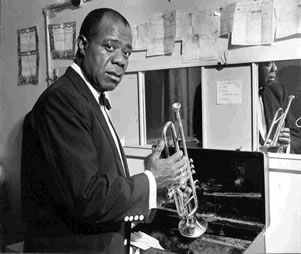
What exactly is protest music, in this case jazz, without lyrics?  The last issue of the Nia Coffeehouse brought to you Louis Armstrong and Nina Simone with Armstrong's, Black and Blue and Nina Simone's, Goddam Mississippi.  Louis bemoans the plight of African Americans by asking, "what did I do to be so black and blue," and Ms. Simone lashes out at Jim Crow, lynching and the state of Mississippi over the assassination of Medgar Evers with a frustrated exclamation, "Goddam Mississippi!"

As Nia asked the question about protest music in jazz today Charlie Haden crossed our sights.  His album, American Dreams is touted by Byron Woods in, Indy Week dotcom back in 2003 as protest jazz, but is it really?  No doubt Charlie, has "chops" with his effort called, Haunted Hearts making Time magazine's top ten list in 1992 and Down Beat selecting Always Say Goodbye as jazz album of the year in 1994.
In my effort to learn more about American Classical Music I find that it is indeed classical and extremely sophisticated so that the listener has to grow in sophistication to fully enjoy it.  A major part of growing in sophistication is just listening and letting the music have first place for a minute.

One very interesting thing is how the album is touted as protest in the Indy Week. com article, Protest Jazz- Bassist Charlie Haden's American Dream but on Charlie's website patriotism and love of country ( certainly protest constitutes for all but the "love it or leave" ilk love of country) wade through, no gush through the music to the forefront in the description. Whatever happened to there's no such thing as bad publicity? Well certainly there is and the joint is first and foremost a nice piece of work whether it is in your face protest or sappy patriotism.
Give Charlie Haden's "America the Beautiful" a listen; compare it to a Ray Charles version with orchestra and challenge yourself to relegate Ray to the back ground, which is a fun exercise and not as hard as you might think, and focus on how the music takes one to a quite different place than where Charlie Haden's version goes, especially the last stanza.  Love or leave it guys you'll love this America the Beautiful by the Gaither Vocal Band it was a little hard for me to get through although as you would expect from the Gaithers it is very well done.
You might enjoy more about Charlie Haden and his Liberation Music Orchestra here at a devout musician I did.
Where is Charlie Haden today?  Check out Charlie Haden news.

An excerpt from the Byron Woods article:
 "But another Charlie Haden story concerns his protests against the Vietnam War, our country's interventions in El Salvador, and apartheid in South Africa. You can hear them on the three Liberation Music Orchestra recordings he's made since 1970--each recorded, as he's pointed out, while a Republican was president."
Here's Byron Woods at Twitter 
 Nia is still wanting local jazz musicians to showcase protest or involvement in today's society at the Nia Coffeehouse and maybe educate us with some words also.  Bring your band and play with Vince Robinson and the Jazz Poets or let's work out sumpthin. (The Jazz Poets at facebook)

Nia means purpose.

Wednesday, May 9, 2012

The Intersection of Jazz and Social Protest... does it happen today?


Nina Simone's Mississippi Goddam sung in protest of Medgar Evers assassination

"NPR -America's cultural cauldron produced music, which criticized segregation with candor, sadness, and humor.  Farai Chideya speaks with Robert O'Mealy. He's the Zora Neale Hurston Professor of English and Comparative Literature at Columbia University, and founder and former director of the Center for Jazz Studies."

I am wondering what Jazz musicians are doing with their music for protest in these decades year 2000 through this 2012.  I've read about musicians protesting the Grammys, the musician's union and I even read about a musician setting himself on fire as a protest but what are today's Jazz musicians doing in society?  What are Cleveland Jazz musicians doing in the wake of the Wall Street and housing debacle and Occupy Wall Street, Occupy Cleveland, Occupy the Hood and Occupy the Kitchen Sink?  Send it in and we'll blog and maybe even vlog it. 
Meanwhile in this NPR interview cuts of:Mississippi Goddamned- Nina Simone,Strange Fruit- Billy Holiday and,
here is the complete Black and Blue by Louis Armstrong from 1929 and 1965.  Interestingly enough, to me, the 1965 rendition has a lot more pathos and pain in Louie's voice, let me know if you agree.


Monday, May 7, 2012

The Occupy 5: Pawns or Masterminds? Flip a COIN (TELPRO)


The Faces of Occupy?

MARCH 24th 2012 was the 32nd anniversary of the assassination of Oscar Romero and Occupy was there...

A short handsome 40 something Brazilian only known as Franco presented the movie "Romero" at St. Alban Episcopal church.   Franco brought with him Conner Stevens,  and Joshua "Skelly" Stafford, two of the five alleged route 82 bridge bomb planners.  These two were not involved in the actual hands-on bridge bombing attempt set up by the FBI.

 The five men arrested in an FBI  plot/sting ostensibly to blow up the route 82 bridge in Brecksville are all associated with Occupy Cleveland.  At least one of the five has a criminal record. 
They have been charged with conspiracy and attempted use of explosive materials to damage physical property affecting interstate commerce. 

Of course  Occupy Cleveland representatives have tried to distance the "organization", but in the words of Tony Soprano, fahgeddaboutit.  Occupy can not distance itself from the people it draws, puts to work and even puts into leadership/spokeperson positions, especially when powerful organizations like say, the FBI or whoever they are working for want to make the association clear.  Brandon Baxter was quoted representing Occupy Cleveland on more than one occasion and was one of the last standing to occupy the tent on Frankfurter downtown.
Conner Stevens Photo by CIOFaithwalker


Joshua "Skelly" Stafford Photo by CIOFaithwalker


I had all but written off Occupy Cleveland  until this incident.  The reason I am going to give Occupy a second look is because I can say that the two I met were not capable of conceiving, planning and executing a bridge bombing.  Forgive me for being so jaded but this really smells of the "good ole days" as some of you can reminisce  over the domestic landscape when COINTELPRO (Counter Intelligence Program) watered the grass and took out the trash until busted in the early 70's. However just like when SOA (School Of the Americas) was "busted" in 2000, 2001 or so COINTELPRO probably just changed their name or just decentralized leadership a bit and kept on trucking.  Who know they may even work out of the impenetrable Western Hemisphere Institute for Security Cooperation (WHINSEC), formerly School of the Americas? So it is not beyond the ken of mortal probability for this to be a set-up to discredit Occupy Cleveland and indeed this may be happening to the Occupy movement across the U.S., if I am correct.


If I were going to do anything I didn't want leading back to me, covert, and  dangerous in which I needed a couple of savvy, sharp, go to cats, it would not be these two.  If I wanted some fall guys I would need neither references or resumes from them, fellas you're hired.

 One of the two I met was much more immature than he should have been for his age and seemed to be the kind of kid who could easily be brought into something like this or planning a rave, your choice, it wouldn't matter to him.


Occupier or Infiltrator? photo by Kimihiro Hoshiro AFP/Getty images

In interviews since the bridge bombing revelation Occupy leaders claim to be nonviolent and say they don't accept that ilk into Occupy Cleveland. However sans violence nothing could seem further from the truth, there is little to indicate this nonviolence stance at the Occupy website  and nothing to indicate they are selective about  whom they accept.  As cool and egalitarian as this democratic come all hither approach seems, one big issue with this approach is that many of the people Occupy needs to engage and proselytize who sympathize with or share in the plight of the 99% are discriminating and selective about with whom they deal.  There are many people watching the 6:00 news thinking, no knowing they dodged a bullet when they had second thoughts about linking arms with an organization whose leadership seems to be made up of long-haired, young, White males with nose rings and ear gauges/plugs.  Before you try to play the prejudice card understand that except for the "young White ear gauges/plugs" part I fit this description.  You can not blame anyone concerned with financial security and safety for shying away from folks on the fringe that haven't kissed the conservative ring or received some blessing from the establishment.

In fact, not much is indicated at the Occupy site period, except lots of street parties and asking for support for more street parties. If they get a bit more organized I smell a cottage industry poster child, like SOAW aka School Of the Americas Watch, another organization that has fun protests. At the Occupy site there is a mission statement of sorts but absolutely, no list of goals, demands and more importantly no objectives to get there, that is to the mission statement.  There is no approach pronged or otherwise.  There is no structure that is evident that is a call to action away from or outside of the protests.  At least with the SOAW they are involved in areas where power is and they know where change needs to be made in the hallways of congress and the Senate and there is a lot going on in community to work toward political leveraging not only in the American political ring  but in at least the first three rows..  

Occupy could learn a lesson or two from the WHINSEC website.  They know that just because they are all about destabilizing democracies in the Americas and are responsible for their fair share of human rights atrocities, one can still look one's best.  Freshen up Occupy, at least get it down in writing.


COINTELPRO (ARTICLE SITE)
COINTELPRO (an acronym for Counter Intelligence Program) was a series of covert, and often illegal,[2] projects conducted by the United States Federal Bureau of Investigation (FBI) aimed at surveilling, infiltrating, discrediting, and disrupting domestic political organizations.
The FBI has used covert operations against domestic political groups since its inception; however, covert operations under the official COINTELPRO label took place between 1956 and 1971.[3] COINTELPRO tactics included discrediting targets through psychological warfare; smearing individuals and groups using forged documents and by planting false reports in the media; harassment; wrongful imprisonment; and illegal violence, including assassination.[4][5][6] The FBI's stated motivation was "protecting national security, preventing violence, and maintaining the existing social and political order."[7]
FBI records show that 85% of COINTELPRO resources targeted groups and individuals that the FBI deemed "subversive,"[8] including communist and socialist organizations; organizations and individuals associated with the civil rights movement, including Martin Luther King, Jr. and others associated with the Southern Christian Leadership Conference, the National Association for the Advancement of Colored People, and the Congress of Racial Equality and other civil rights organizations; black nationalist groups; the American Indian Movement; a broad range of organizations labeled "New Left", including Students for a Democratic Society and the Weathermen; almost all groups protesting the Vietnam War, as well as individual student demonstrators with no group affiliation; the National Lawyers Guild; organizations and individuals associated with the women's rights movement; nationalist groups such as those seeking independence for Puerto Rico, United Ireland, and Cuban exile movements including Orlando Bosch's Cuban Power and the Cuban Nationalist Movement; and additional notable Americans—even Albert Einstein, who was a member of several civil rights groups, came under FBI surveillance during the years just prior to COINTELPRO's official inauguration.[9] The remaining 15% of COINTELPRO resources were expended to marginalize and subvert "white hate groups," including the Ku Klux Klan and the National States' Rights Party.[10]
FBI Director J. Edgar Hoover issued directives governing COINTELPRO, ordering FBI agents to "expose, disrupt, misdirect, discredit, or otherwise neutralize" the activities of these movements and their leaders.[11][12]