I like that Alexs Pate states in the video below “Amiri was before beat,” because though Mr. Baraka was part of the movement, even publishing, Kerouac and Ginsberg before he started Yugen magazine, he is often not thought of as part of this very significant beat shift in literary thinking, especially poetry.
Amiri Baraka strikes a chord in me for many reason, one reason because of his bravery. Still I search for that consistent core or reserve and resolve to be who I am and do the right thing. He is asked in this video what is the cost of truth telling. I feel that I have made great and significant gains but sometimes not.
I’m not quite sure what institution Amiri Baraka didn’t buck while being himself and following what he learned and what he believe in.For instance he distanced himself from Black Nationalism to become a Marxist.
He imparted some insight to this shift stating, "As long as the black writer was obsessed with being an accepted, middle class, Baraka wrote, he would never be able to speak his mind, and that would always lead to failure. Baraka felt that America only made room for white obfuscators, not black ones."
His life at the very least exemplifies, an Ismael Reed, quote, “writin is fightin,” from Reed's essay titled, Writin is Fightin: Thirty Seven Years of Boxing on Paper. I love that Baraka was more than sympathetic toward Castro and Cuba, which he made plain with, Cuba Libre, an essay and as a member of the Fair Play for Cuba committee in 1960 and through, ‘A Declaration of Conscience,’ a literary endeavor in favor of Castro’s regime that he co authored.
Alexs Pate’s intro is rather long but, actually
one of the few intros you don’t want to fast
forward through. Amir Baraka starts at 9:34
Perhaps the following bespeaks my simple-mindedness, but of all his endeavors, of all there would be to discuss I would have loved to talk to him about his name change.I legally changed my name in the early 90s and to this time, January 2014 still many are insulted and hurt feelings continue with many refusing to speak it or even write it in legal documents. I approached it thinking of its permanence more or less like a tattoo.Interestingly, out of all the stakeholders (many more than I thought there could be) the only one who heard the why and embraced me, Cavana Ibeji Opo Faithwalker, was my father after whom I was named.
Many laugh at us Africans-American half-breeds and we at ourselves as the misspellingess, most prolific name changers on the planet from Shanaynay to Tequila to Mercedes to Trevon, Malik, and Jamal.I am not positing that we should all change our names or even that we corner the market on name changing and creating anew. I do affirm it is one of our weapons of mass construction to reclaim our very souls and bodies as we have light to do so.However, we must stop and look at the continuum from Shanaynay to Amiri and realize that “X” marks the spot.“X” may be the alpha and omega of our kujichagulia, our self-determinism. Poor Shaniqua political at birth, political by birth, political when she just wants a proper future for her son. Take heart in Amiri.
Thank you Amiri Baraka (born Everett LeRoi Jones; October 7, 1934 – January 9, 2014), formerly known as LeRoi Jones and Imamu Amear Baraka
Home base for the Nia Coffeehouse is at 2555 Euclid Heights Boulevard in St. Alban in Cleveland Heights 44118. For more information Ph. 216/759-0790, leave a message here in comments or at Leftthumbprint@gmail.com.
Announcement and information about our next Nia Coffeehouse events
More on protest jazz and music
Comments and favorites from our readers
Wade in the Water
Our next happenings...
Our next Nia Coffeehouse @ St. Alban music and poetry set is June 26th @ 6:00pm. Nia is coming at you with healthy music, phenomenal words, and some healthy eats for you. And unless we say otherwise, Always Open Mic.
Our featured poet is Judith Mansour.
Judith after her last event... got kinda rowdy
Judith Mansour
Judith has a BA in English and, Psychology and an MA in English and Creative Writing. She has been a creative force in the writing, art and literature scene behind the scenes and in front of the mic for years. You can find Judith at LinkedIn and at facebook.
Vince Robinson (seated) with past and current Jazz Poet members
The band- Vince Robinson and the Jazz Poets. Look for future Nia blogs dedicated just to this powerhouse who has done so much in poetry, jazz and the community but for now go here are no less than ten pages on Vince and the cats take your pick.
So Many Issues Too Little Time
Soon Nia will be looking at beautiful music and laying protest jazz aside unless you our readers want to keep protest alive. We've got some interesting responses for favorite protest music from you but first we have questions. It is quite possible that most folks feel overwhelmed and powerless to do anything about today's social ills. For one thing, the "what can little ole me do" syndrome kicks into effect for many and secondly there are so many things that need attention it is overwhelming, for instance there is fracking, homelessness, infant mortality, child abuse, oil spill issues, Kony, Travon Martin; the object or the objects of the occupy everything movement; the Grammy awards categories being cut that Nia thinks is an important cultural, diversity and monetary issue for people of color and the list goes on.
Musicians: Powerful or Powerless
Should musicians and people in media feel powerless? Many talk about the power of music but maybe it's a fairy tale conjured up by musicians and their managers. Already the entire burden shouldn't be put on jazz so we can broaden the conversation for now with an emphasis on jazz.
Mark David Ritscher aka Malichi Ritscher, a fixture and musician in the Chicago music scene, apparently didn't think the power of music was enough. Ritscher's self-immolation in 2006 on downtown Chicago's Kennedy expressway not mentioned by the media for nearly a week.Chicago Sun-TimescolumnistRichard Roeper, finally wrote "With all due respect, if he thought setting himself on fire and ending his life in Chicago would change anyone's mind about the war in Iraq, his last gesture on this planet was his saddest and his most futile."[3]
Ritscher left a detailed smoking gun (sorry) pointing at protest as the raison d'être of his actions. What about protest music, the power of music, the music that soothes the savage beast? The actual quote is "music has charms to soothe the savage breast" and forgive me for waxing pedantic. It would be remiss of us not to mention that according to Ritscher's son Mark David was a recovering alcoholic fighting depression and yet we say this exposes two more arena's in which one must question the power of music.
Latin Jazz, Grammy Awards Protest
Go to Multi- Americanfor the entire video and more info on the protest
In contrast to Mr. Ritscher's self-immolation members of the Latin Jazz community protested with music and signs and slogan-chanting the elimination of 31 mostly people of color categories from the Grammy Awards. Polka, gospel, Native American and R&B are among the categories that have been removed. It would be very interesting if musicians took a page from Black folk and started their own Grammy since they as a group are now not allowed to participate; because of this kind of exclusion Black newspapers sprang up, Miss Black America beauty pageant and Historically Black Colleges and Universities (HBCU) to workers' unions, clubs and restaurants.
Nia would like to hear from musicians and people in the industry;
Nia would like to hear from patrons and music lovers;
What place does music hold in your life?
Has music effected change in your life, an epiphany perhaps, set you on a different path, "saved your life," or helped you through a most difficult time in life? What was the music that "did it?"
What could local musicians do to help local causes say in Cleveland, Ohio?
"I totally agree Oscar Brown Jr and also that satire and humour can be found in the MUSIC as well as the lyrics. At our local pub on Sunday (The Mitre) the band playing there (Big Chief) played Fats Waller's "Ain't Misbehaving" to a ska beat. It worked a treat and the humour of the contrast between old and new wasn't lost. There's also a tension between a song by a black composer/performer being played to rhythm mostly thought of as being developed by white artists."For me Jazz works best when it's in fusion with other music and the players are pushing the boundaries."
Ian concerning Nina Simone:
"There's a woman who understands, and owns, her own feelings and is big enough to respect other people and allow them theirs. Great performance."
From musician: Simmie DavisPROTEST SONGS. I aint got time to die, Lift evry voice and sing, To be young gifted and black.
"One
of the most powerful protest songs is surely, "Wade in the water".
Still sung today, it is well known for the double meaning of it's lyrics
which continually remind us of the horrors of slavery which, after 300
years still exists in various forms."
"Wade in the Water" is the name of a Negro spiritual first published in New Jubilee Songs as Sung by the Fisk Jubilee Singers (1901) by John Wesley Work II and his brother, Frederick J. Work (see Fisk Jubilee Singers).
The main chorus is:
Wade in the water.
Wade in the water children.
Wade in the water.
God's gonna trouble the water.
The song relates to both the Old and New Testaments. The verses reflect the Israelites' escape out of Egypt as found in Exodus:14.[1] The chorus refers to healing: see John
5:4, "For an angel went down at a certain season into the pool, and
troubled the water: whosoever then first after the troubling of the
water stepped in was made whole of whatsoever disease he had."
Many internet sources and popular books claim that songs such as
"Wade in the Water" contained explicit instructions to fugitive slaves
on how to avoid capture and the route to take to successfully make their
way to freedom.[2]
This particular song allegedly recommends leaving dry land and taking
to the water as a strategy to throw pursuing bloodhounds off one's
trail.
- Wikipedia
Here is a cool version of Wade in the Water by Kevin Whallum:
Jazz is known for it's musical humor and satire, it only makes since that humor and satire would be present in lyrics written to and for jazz as a tool that enhances protest. Last Nia blog we looked at protest without lyrics this week let's look at the spoken word traveling from in front of the music to melody without music to pure spoken word. Oscar Brown, Jr., runs the gamut. Oscar Brown, Jr (October 10, 1926 – May 29, 2005) was an American singer, songwriter, playwright, poet, and civil rights activist who created lyrics for jazz protest and whose lyrics easily crossed over into the realm of poetry and spoken word. Here is Oscar Brown Jr.'s "Forty Acres and a Mule" music and lyrics. As you will see it is not about reparations but face value broken promises observed from street level. Notice
how the spoken word comes down and dances around a tight driving 4/4
cymbal and upright bass with a 2/4 rim shot:
Here is an interesting counter point to "Forty Acres and Mules," spoken
word jazz with jazz great Oscar Brown on Def Poetry Jam more or less
singing spoken word without any music in "I Apologize" but laying down a
much tighter meter (4/4 maybe?):
Here is a show tune by Rodgers and Hammerstein that floated by unscathed until it got to ... not Mississippi but Georgia. Quoting Rene Marie in an article last August in Jazz Times,
Who woulda thunk that this lovely song written by Rodgers and Hammerstein about racial prejudice could be snuck into South Pacific?
Rodgers and Hammerstein were repeatedly pressured to remove the song
from the musical, with lawmakers in Georgia actually going so far as to
introduce legislation that would make illegal the performance of any
creative works with ideas that stemmed from “Communist” thinking.
According to James Michener (author of the book that inspired the
musical), “The authors replied stubbornly that this number represented
why they wanted to do the play in the first place. … [E]ven if it meant
the failure of the production, it was going to stay in.”
Well check out the above list and send us some of the protest songs that help define you whether you be a musician or librarian. We'll post your selections and comments.
Here is one of my favorites from Gil Scott Heron, hmmm I think he's talkin' to Black folk What do you think? The Revolution will not be Televised...
Nia Continues the Conversation on Jazz and Protest with a look at Charlie Haden
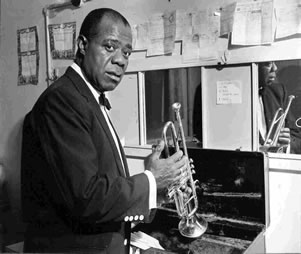
What exactly is protest music, in this case jazz, without lyrics? The last issue of the Nia Coffeehouse brought to you Louis Armstrong and Nina Simone with Armstrong's, Black and Blue and Nina Simone's, Goddam Mississippi. Louis bemoans the plight of African Americans by asking, "what did I do to be so black and blue," and Ms. Simone lashes out at Jim Crow, lynching and the state of Mississippi over the assassination of Medgar Evers with a frustrated exclamation, "Goddam Mississippi!"
As Nia asked the question about protest music in jazz today Charlie Haden crossed our sights. His album, American Dreams is touted by Byron Woods in, Indy Week dotcom back in 2003 as protest jazz, but is it really? No doubt Charlie, has "chops" with his effort called, Haunted Hearts making Time magazine's top ten list in 1992 and Down Beat selecting Always Say Goodbye as jazz album of the year in 1994.
In my effort to learn more about American Classical Music I find that it is indeed classical and extremely sophisticated so that the listener has to grow in sophistication to fully enjoy it. A major part of growing in sophistication is just listening and letting the music have first place for a minute.
One very interesting thing is how the album is touted as protest in the Indy Week. com article, Protest Jazz- Bassist Charlie Haden's American Dream but on Charlie's website patriotism and love of country ( certainly protest constitutes for all but the "love it or leave" ilk love of country) wade through, no gush through the music to the forefront in the description. Whatever happened to there's no such thing as bad publicity? Well certainly there is and the joint is first and foremost a nice piece of work whether it is in your face protest or sappy patriotism.
Give Charlie Haden's "America the Beautiful" a listen; compare it to a Ray Charles version with orchestra and challenge yourself to relegate Ray to the back ground, which is a fun exercise and not as hard as you might think, and focus on how the music takes one to a quite different place than where Charlie Haden's version goes, especially the last stanza. Love or leave it guys you'll love this America the Beautiful by the Gaither Vocal Band it was a little hard for me to get through although as you would expect from the Gaithers it is very well done.
You might enjoy more about Charlie Haden and his Liberation Music Orchestra here at a devout musician I did.
Where is Charlie Haden today? Check out Charlie Haden news.
An excerpt from the Byron Woods article:
"But another Charlie Haden story concerns his protests against the Vietnam War, our country's interventions in El Salvador, and apartheid in South Africa. You can hear them on the three Liberation Music Orchestra recordings he's made since 1970--each recorded, as he's pointed out, while a Republican was president."
Here's Byron Woods at Twitter
Nia is still wanting local jazz musicians to showcase protest or involvement in today's society at the Nia Coffeehouse and maybe educate us with some words also. Bring your band and play with Vince Robinson and the Jazz Poets or let's work out sumpthin. (The Jazz Poets at facebook)
"NPR -America's cultural cauldron produced music, which criticized segregation with candor, sadness, and humor. Farai Chideya speaks with Robert O'Mealy. He's the Zora Neale Hurston Professor of English and Comparative Literature at Columbia University, and founder and former director of the Center for Jazz Studies."
I am wondering what Jazz musicians are doing with their music for
protest in these decades year 2000 through this 2012. I've read about musicians protesting the
Grammys, the musician's union and I even read about a musician setting
himself on fire as a protest but what are today's Jazz musicians doing in society?
What are Cleveland Jazz musicians doing in the wake of the Wall Street and
housing debacle and Occupy Wall Street, Occupy Cleveland, Occupy the Hood and Occupy the
Kitchen Sink? Send it in and we'll blog and maybe even vlog it.
Meanwhile in this NPR interview cuts of:Mississippi Goddamned- Nina Simone,Strange Fruit- Billy Holiday and,
here is the complete Black and Blue by Louis Armstrong from 1929 and 1965. Interestingly enough, to me, the 1965 rendition has a lot more pathos and pain in Louie's voice, let me know if you agree.
Well the Nia Coffeehouse has been on hiatus for a couple of months. We hope you missed us. We will be back soon. Home base will be St. Alban, 2555 Euclid Heights Blvd. Look for the read door on the hill. We have more space, we'll serving food and bringing you poetry, music, and spoken word. We will be back to you soon with times and dates. You can see where we've been at facebook, https://www.facebook.com/pages/The-Nia-Coffeehouse/129467261263?sk=app_2309869772


The main chorus is:
- Wade in the water.
- Wade in the water children.
- Wade in the water.
- God's gonna trouble the water.
The song relates to both the Old and New Testaments. The verses reflect the Israelites' escape out of Egypt as found in Exodus:14.[1] The chorus refers to healing: see John 5:4, "For an angel went down at a certain season into the pool, and troubled the water: whosoever then first after the troubling of the water stepped in was made whole of whatsoever disease he had."Many internet sources and popular books claim that songs such as "Wade in the Water" contained explicit instructions to fugitive slaves on how to avoid capture and the route to take to successfully make their way to freedom.[2] This particular song allegedly recommends leaving dry land and taking to the water as a strategy to throw pursuing bloodhounds off one's trail.
- Wikipedia
Here is a cool version of Wade in the Water by Kevin Whallum:
Wade in the Water - Jazz Version from unityall on GodTube.